Social Work with Power Quote SVG: A Designer's Review
As a designer who spends more time staring at stitch simulations than I do sleeping, I approach every new digital embroidery file with a healthy dose of skepticism. We have all been there: you buy a gorgeous graphic online, load it into your software, and realize the density is a nightmare or the lettering is too fine for anything other than a poster. That is why I took a close look at the Social Work with Power Quote SVG Design. This isn't just about whether it looks good on a screen; it is about whether it holds up when you are trying to meet a deadline for a custom order or stock your Etsy seller shop with reliable inventory.
First Impressions: Mood and Visual Personality
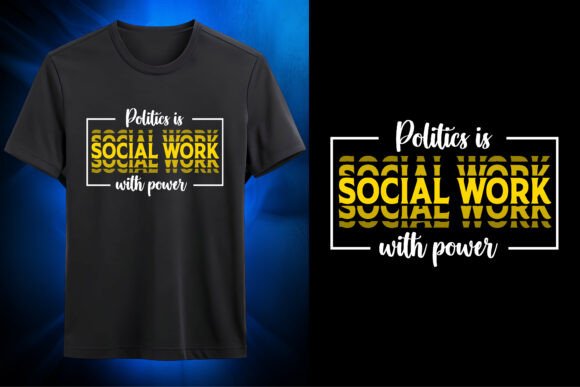
The moment I pulled up the design, the mood was immediately clear. It strikes a balance between professional advocacy and personal empowerment. For social workers, this field is often emotionally taxing, so a design that screams "power" without being aggressive is a rare find. The layout feels intentional, likely utilizing strong typography to carry the message. When evaluating T-Shirt Designs and Graphics like this, I always look for visual weight. Does the text feel floating and weak, or does it have a grounded presence? This design leans toward the latter, making it an excellent candidate for statement pieces.
The theme naturally belongs on items meant to be worn with pride or displayed in a workspace. It is not a subtle background pattern; it is the main event. For an embroidery project, this means the design needs to breathe. If the original SVG has tight kerning or intricate serifs, we need to be careful about how those translate into thread. A design that works as a print often fails in embroidery if the gaps between letters are too small for the needle to navigate without creating a bird's nest of thread.
Real-World Application: The Custom Tote Scenario
To truly test the viability of this asset, I imagined a specific real-life scenario: a local university social work department needed fifty custom tote bags for a graduation ceremony. They wanted something durable, washable, and meaningful. The Social Work with Power Quote SVG Design seemed perfect for this handmade product request.
In this context, the design would likely be digitized as a combination of fill stitch for larger graphical elements and satin stitch for the lettering to ensure crisp edges. On a canvas tote, which has a rougher fabric texture than a t-shirt, the design needs enough substance to not get lost in the weave. If the quote is the focal point, the contrast between the thread colors and the bag color is critical. A dark navy thread on a natural canvas bag would offer high readability, reinforcing the "power" aspect of the quote.
However, if I were applying this to a sweatshirt embroidery project, the approach changes. Sweatshirts often have a fuzzy surface. If the design relies on very thin lines or tiny details, they might disappear into the fleece. This is where reviewing the file details becomes non-negotiable. Since the product description mentions EPS and JPEG files, it implies this is primarily a vector graphic intended for printing or further digitizing. If you are an embroiderer, you cannot plug an SVG directly into most machines without converting it first. You must assess if the shapes are clean enough to auto-digitize or if they require manual tweaking to create a viable machine embroidery design.
Navigating Fabric Challenges and Hoop Constraints
One of the biggest hurdles with quote-based designs is the hoop size. If the quote is long, it might require a large hoop, which limits the garments you can use. You cannot easily fit a wide design on a structured cap or a child's onesie. Before committing to a bulk order of custom apparel, check the dimensions. If the design is too wide for a standard 5x7 hoop, you might be forced to use a 6x10 or larger, which not all machines support.
Furthermore, consider the fabric type. If a client wants this on a stretchy performance tee, the stitch density becomes a major concern. High-density stitching on stretchy fabric can cause puckering, making the finished product look amateurish. In such cases, using a cut-away stabilizer is essential to maintain the integrity of the design after multiple washes. For textured fabrics like towels or aprons, a water-soluble topper might be necessary to prevent the stitches from sinking into the pile, ensuring the "Power" message remains legible.
Dark fabrics present another challenge. If the design includes open spaces or relies on the fabric color as part of the design (negative space), it will look completely different on a black hoodie versus a white one. Always run a simulation or a test stitch-out on scrap fabric that matches your final product. Do not assume the thread colors you picked on your monitor will match the physical spools, especially when dealing with gradients or specific brand colors associated with social work organizations.
Commercial Value and Brand Consistency
For craft business owners and creative entrepreneurs, the value of a design lies in its versatility and the trust it builds with customers. A well-executed embroidery job signals professionalism. If the Social Work with Power Quote SVG Design is stitched cleanly, with no jump stitches visible and proper underlay, it elevates the perceived value of the item. Customers are willing to pay more for a personalized gift that feels substantial and well-made.
This design fits perfectly into niche markets. Think about holiday embroidery gifts for colleagues, appreciation gifts for nonprofit staff, or merchandise for a small shop product line. It creates an immediate connection with the buyer because it speaks their language. However, brand consistency is key. If you are selling these as part of a collection, ensure the font style and aesthetic match your other listings. Inconsistent styling can confuse buyers and dilute your brand identity.
Practical Notes for the Working Designer
Before you start stitching or listing this as a printable mockup or finished good, keep these practical steps in mind:
- Verify Licensing: The product description mentions commercial use potential, but always double-check the specific license terms. Can you sell the digital file, or only the finished physical item? This distinction is vital for avoiding legal issues.
- Test on Scraps: Never run a new design on a client's garment first. Use scrap fabric of the same weight and texture to test tension and density.
- Check Contrast: View the design in black and white. If the details vanish in grayscale, the contrast might be too low for certain fabric combinations.
- Inspect Small Details: Look closely at the punctuation and the ends of the letters. Are they sharp enough to stitch, or will they turn into blobs?
- Stabilizer Selection: Match your stabilizer to the fabric. Knits need cut-away; wovens can often use tear-away, but heavy quotes usually benefit from the extra support of cut-away.
- File Format Reality: Remember that SVG, EPS, and JPEG are graphic formats. If you are doing machine embroidery, you will need to digitize this into DST, PES, or EXP formats compatible with your machine, unless a specific embroidery file version is provided separately.
Ultimately, the Social Work with Power Quote SVG Design offers a strong foundation for meaningful projects. Whether you are creating a baby embroidery piece for a new social worker parent or a bold statement for a conference tote bag design, the potential is there. But as with any design assets, the final quality depends entirely on your preparation, your understanding of the materials, and your attention to the technical details of the stitch. Treat the design with respect, prepare your hooping and stabilizing correctly, and you will end up with a finished product that truly empowers the wearer.